



Re-roofing vs. Roof Replacement: Best Choice for Homes in 2026
January 2026
Key Takeaways
- Re-roofing installs new shingles over an existing roof layer.
- Roof replacement removes old materials down to the decking.
- Re-roofing offers short-term cost savings but limited lifespan.
- Roof replacement costs more upfront but lasts longer.
- Structural damage usually requires full replacement.
- The right choice depends on roof condition, age, and goals.
You notice it one rainy morning. A small brown stain on the ceiling. Or maybe a shingle in the driveway that definitely wasn’t there yesterday. So you do what most homeowners do. You open Google and type “reroofing vs roof replacement,” hoping for a clear answer that doesn’t feel overwhelming or wildly expensive.
The truth is there isn’t a one-size-fits-all answer. But there is a smart way to decide. And once you understand the difference between re-roofing and full roof replacement, the decision becomes much simpler.
Let’s break it down the way a roofing professional would explain it if they were standing in your driveway, not selling you anything, just helping you make the right call for your home in 2026.
What This Blog Covers
- The difference between re-roofing and roof replacement
- When re-roofing makes sense
- When full roof replacement is necessary
- Cost comparison and long-term value
- How to decide what’s best for your home in 2026
Re-roofing vs roof replacement refers to two different roofing solutions. Re-roofing involves adding new shingles over an existing roof layer, while roof replacement removes all materials down to the decking and rebuilds the roof system. The best option depends on roof condition, structural integrity, and long-term goals.
The real question behind “re-roofing vs roof replacement”
Most homeowners aren’t actually asking about shingles.
They’re asking:
- Is my roof still safe?
- Am I fixing the superficial problem and overlooking the real issue?
- What’s the most cost-effective solution for my roof right now?
That’s why it is important to understand when to reroof vs replace matters for you and your home.
What re-roofing actually means and when it becomes relevant for you?
Re-roofing is also known as a roof shingles overlay. It means installing a new layer of shingles over the existing one. No full tear-off. No exposed decking. Less disruption.
When re-roofing can be a smart move
Re-roofing works best when:
- Your existing roof has only one layer of shingles
- The roof decking condition underneath is solid
- There’s no sagging or visible signs of structural issues
- Damage is mostly cosmetic or weather-related
- You want reroofing cost savings in the short to medium term
Based on these scenarios, re-roofing can offer a significant roof lifespan extension without the higher price tag of a full replacement.
Re-roofing benefits and drawbacks
Benefits
- Lower upfront cost
- Faster installation
- Less labour and cleanup
- Minimal disruption to daily life
Drawbacks
- Hidden roof damage can’t be addressed
- Limited by local building codes roof requirements
- Doesn’t reset the roof’s lifespan completely
- Not ideal as a long-term roofing investment
Re-roofing is practical. But it’s not always the most future-proof choice.
When roof replacement becomes the better decision
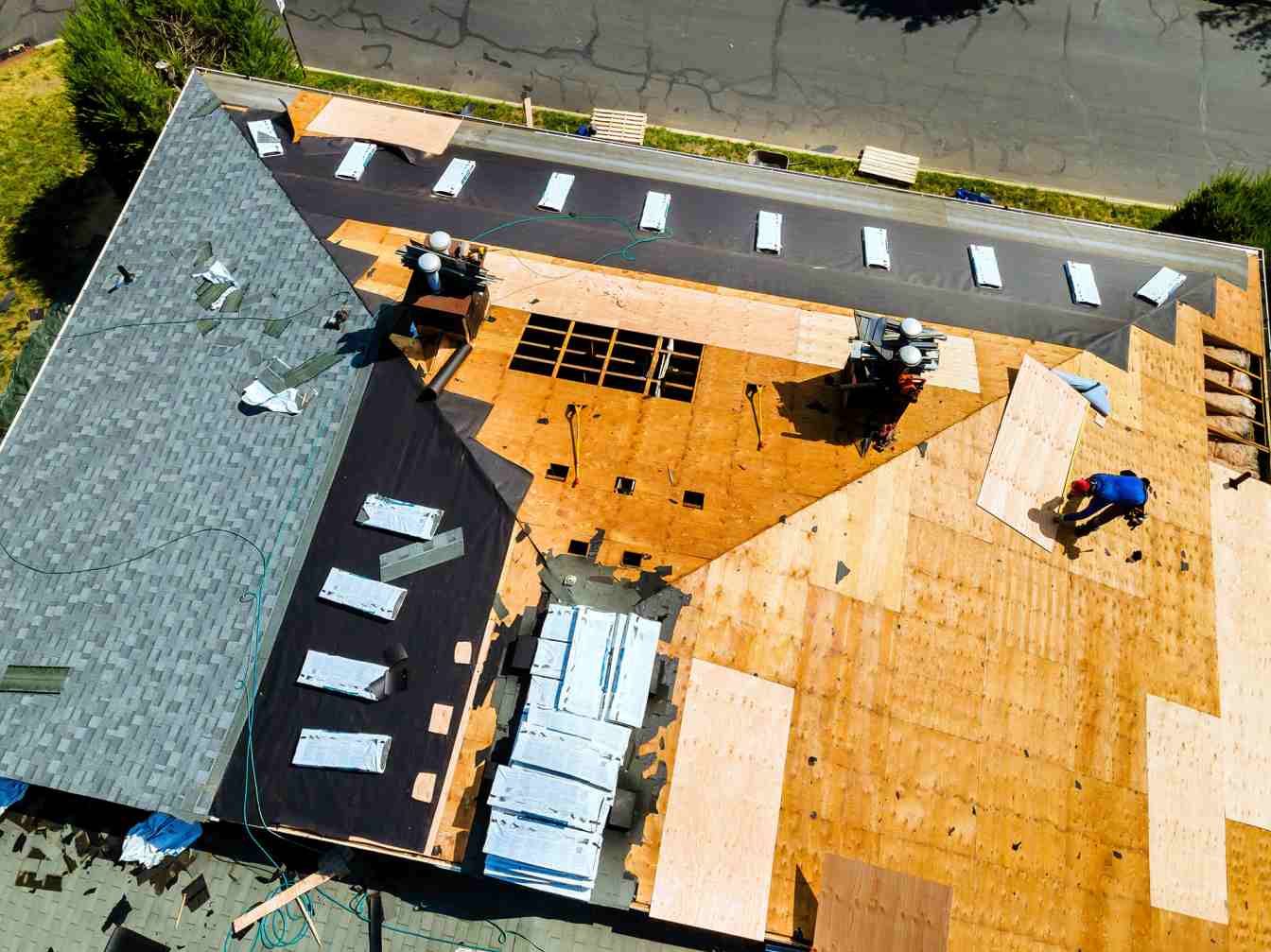
A full roof replacement on the other hand refers to the removal of all existing materials down to the decking and rebuilding the roof system from scratch.
Roof replacement is usually the smarter option when:
- There are multiple layers of old shingles
- You’ve experienced repeated leaks
- The roof is near or past its expected lifespan
- There’s compromised structural integrity of the roof support
- Inspections reveal rot or moisture damage
- You’re planning a major home roof upgrade option
This is where the roof replacement vs repair decision often shifts. Repairs and overlays stop making sense when the foundation itself is compromised.
Roof replacement cost comparison: upfront vs long-term value
Yes, replacement costs more upfront. But cost alone doesn’t tell the full story.
Re-roofing costs
- Lower initial expense
- Shorter lifespan
- May require replacement sooner
Roof replacement costs
- Higher upfront investment
- Longer lifespan
- Better warranty options
- Fewer surprise repairs
More times than not, replacement ends up being the more cost-effective roofing solution in the longer run, especially if homeowners plan to stay for the long haul.
Roof overlay vs replacement in 2026: Is it any different?
Today’s roofing decisions aren’t just about today’s damage. They’re about:
- Stronger weather patterns
- Updated building codes
- Higher material performance standards
- Better insulation and ventilation options
A full replacement allows your contractor to bring your roof up to current standards, something a re-roof simply can’t do. That matters more now than it did even five years ago.
How B-Cheema Roofing helps homeowners make the right call?
At B-Cheema Roofing, we’ve been helping homeowners make these decisions since 1999. With over 25 years of hands-on experience, we’ve seen what happens when the wrong choice is made and how costly that can be later.
Our approach is simple:
- Honest inspections
- Clear explanations
- No pushing unnecessary work
You could be looking at re-roofing, full roof replacement, or ongoing roof maintenance planning, there will always be one thing in common. Quality work at an affordable price, done right the first time.
FAQs – Answering Common Re-Roofing Vs Roof Replacement Questions
- When should I reroof instead of replace?
Re-roofing makes sense when your roof has only one layer of shingles, no leaks or sagging, and the structure underneath is in good condition. It’s best for roofs with minor wear where the decking and support system are still solid.
- Is reroofing cheaper than roof replacement?
Yes, reroofing usually costs less upfront because there’s no tear-off involved. However, it doesn’t last as long as a full replacement, so while it saves money now, it may cost more over time.
- Can re-roofing hide roof damage?
Yes. Because the old shingles stay in place, issues like moisture damage or rotting decking can go unnoticed. This hidden damage can worsen over time and lead to more expensive repairs later.
- How long does a re-roofed roof last?
A re-roofed roof typically lasts around 10–15 years. Its lifespan depends on the condition of the existing roof, material quality, and weather exposure, and is generally shorter than a full replacement.
- Does roof replacement increase home value?
Yes. A new roof improves safety, energy efficiency, and curb appeal. It also reassures buyers that major repairs won’t be needed soon, which can positively impact resale value.
- Are there building code limits on reroofing?
Yes. In Surrey, Canada, building codes typically allow only one layer of shingles. If your roof already has multiple layers or added weight affects structural safety, a full roof replacement is usually required. A local inspection helps confirm what’s permitted for your home.
If you’re deciding between re-roofing and roof replacement in Surrey, British Columbia, Canada, B-Cheema Roofing offers expert inspections and honest recommendations based on your roof’s actual condition. With over 20 years of experience, we help homeowners choose durable, cost-effective roofing solutions that meet local building codes and weather demands.
Not sure which option is right for your roof? Schedule a professional roof inspection with B-Cheema Roofing today.
Final thoughts: It’s not re-roofing vs roof replacement; it’s what’s right for your home
If you’re searching for reroof vs new roof, chances are your roof is trying to tell you something. The best move is to listen, understand the condition beneath the shingles, and choose the option that protects your home for years to come.
Still unsure? That’s normal. A professional assessment can make the answer very clear.
And once you have that clarity, the decision gets a whole lot easier.

B Cheema Roofing Ltd. Began business in 1999 and has been serving residents and businesses in Vancouver and Lower Mainland... Read more